

Herbs and Spices
Dried Herbs
- Concentrated Taste: Dehydration evaporates the water from cell walls, leaving behind powerful, deep flavors that are often earthier or more pungent.
- Conversion: Dried herbs are roughly 3 to 4 times stronger than their fresh counterparts. The general rule of thumb is to use 1/3 to 1/4 the amount of dried herbs when a recipe calls for fresh (e.g., 1 teaspoon of dried herbs for every 1 tablespoon of fresh).
- Long-Cooking Dishes: Dried herbs perform best in recipes that simmer for an extended period, allowing time for the liquid to rehydrate the leaves and release their flavor. They are ideal for stews, soups, braises, and tomato sauces.
- Dry Rubs: They are highly effective in rubs for long-cooked, smoked, or barbecued meats.
- When to Avoid: They are generally not recommended for raw dishes (like salads, salsas, or as a fresh garnish), where they can taste dusty or muted compared to vibrant fresh herbs.
- Hardy/Woody Herbs: Herbs with higher initial concentrations of oils retain their flavor exceptionally well when dried. These include oregano, thyme, rosemary, marjoram, and sage.
- Delicate “Fine” Herbs: Herbs like basil, parsley, cilantro, dill, and tarragon lose most of their bright, volatile compounds during the drying process, making them inferior in flavor when dried.
- Shelf Life: For optimal flavor and color, most whole dried leafy herbs should be used within 6 months to 1 year. Ground herbs lose their potency even faster (within about 6 months).
- How to Store: Store them in airtight containers in a cool, dark place (like a pantry cabinet) away from direct sunlight and stove heat to prevent them from becoming stale or faded.
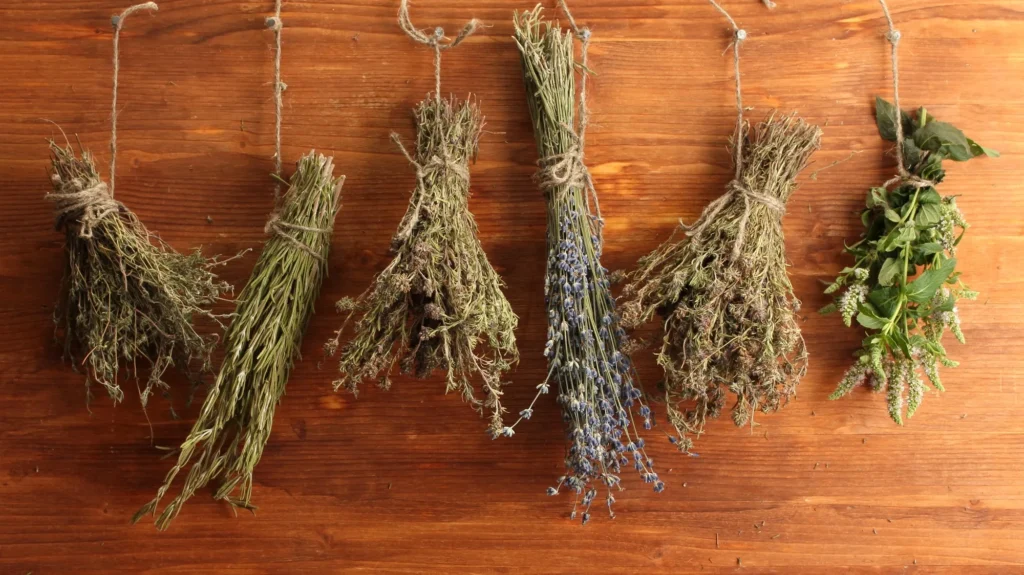
Dried herbs are fresh herbs—such as basil, oregano, thyme, and rosemary—that have had their water content removed, typically through air-drying, dehydration, or freeze-drying. This process concentrates their volatile oils and extends their shelf life from a few days to several months or even years.
The Science of Drying
Concentration: Removing water does not just preserve the herb; it concentrates the flavor. As a rule of thumb, dried herbs are significantly more potent than their fresh counterparts. Because the flavor is concentrated, recipes often call for a ratio of one teaspoon of dried herbs to one tablespoon of fresh herbs.
Volatile Oils: The “aroma” and “flavor” of herbs come from volatile essential oils. Drying methods that use high heat can degrade these oils. Modern commercial methods, such as freeze-drying or low-temperature convection drying, are preferred because they better preserve the color, aroma, and chemical composition of the herb.
Key Types and Uses
Dried herbs fall into two general culinary categories:
Hardy Herbs: These are woody or thick-leaved herbs like rosemary, thyme, oregano, and bay leaves. They hold up exceptionally well to drying and can handle long cooking times, making them ideal for soups, stews, and braises.
Soft/Delicate Herbs: Herbs like parsley, chives, and cilantro are more difficult to dry while maintaining their flavor. While they can be dried, they often lose significant quality compared to hardy herbs and are frequently better preserved via freezing.
Commercial and Storage Advantages
Shelf Stability: Unlike fresh produce, dried herbs are not prone to rapid spoilage. When stored in sealed containers away from light, heat, and moisture, they can be stored at room temperature for 6–12 months.
Logistics: They are lightweight and low-volume, making them excellent candidates for shipping and distribution. They do not require the expensive cold-chain logistics needed for fresh agricultural products.
Standardization: In commercial culinary applications, dried herbs provide a consistent flavor profile, whereas fresh herbs can vary in intensity based on the season or harvest conditions.
Handling and Quality Indicators
For your auction platform, consider these markers of quality when evaluating herb listings:
Color: A vibrant green (or the herb’s natural dried color) usually indicates proper, quick drying. Dull, brownish, or gray herbs often suggest the product is old or was dried using excessive heat.
Aroma: When a small amount is crushed between the fingers, it should release an immediate, strong scent. If there is little to no smell, the volatile oils have oxidized, and the herb is likely past its prime.
Packaging: Moisture is the enemy. Listings should specify that the product is packaged in airtight, opaque containers (light degrades herbs as quickly as heat).