
Ranchers
Poultry Meets
Common Types of Poultry
- Chickens: The most common type globally, raised for both meat and eggs.
- Turkeys: Commonly consumed for their meat, particularly around holidays.
- Ducks and Geese: Waterfowl raised for meat, eggs, and feathers (down).
- Other Birds: Includes quail, pheasants, guinea fowl, and sometimes larger birds like ostriches or emus.
Poultry encompasses domesticated bird species raised primarily for meat and eggs. In the context of agricultural commerce, it is a dominant sector, characterized by high production efficiency, rapid growth cycles, and strict biosecurity requirements.
Primary Poultry Classifications
The industry is segmented by species, each serving distinct market demands:
Chicken: The most widely produced poultry. It is categorized by age and weight, including broilers (young, for meat), fryers, and roasters.
Turkey: Often sold as whole birds, or processed into parts (breasts, wings, ground meat). Its market is highly seasonal, peaking around holidays.
Waterfowl (Duck & Goose): Prized for a higher fat content and distinct flavor profiles, often marketed as specialty or gourmet products.
Game Birds: Includes quail, pheasant, and guinea fowl. These are niche products often sold to high-end restaurants or specialty food markets.
Nutritional Profile
Poultry is a cornerstone of global protein consumption due to its nutrient density and versatility:
Protein: It is an excellent source of high-quality, lean protein.
Fat Content: Poultry is generally lower in saturated fat than red meat. The fat is concentrated in the skin; removing it significantly lowers the caloric density.
Key Nutrients: It provides essential B-vitamins (niacin, B6, and B12), selenium, and phosphorus.
Production and Regulatory Standards
In the United States, the poultry industry is heavily regulated to ensure consumer safety:
Biosecurity: Because birds are susceptible to rapid disease transmission (such as Avian Influenza), commercial operations enforce strict biosecurity protocols, including controlled-access facilities and monitoring of flock health.
Grading: The USDA provides voluntary grading services (Grade A, B, and C). Grade A is the standard for retail, representing birds free of defects and deformities.
Antibiotic Use: Many markets now require transparent labeling regarding the use of antibiotics, with designations such as “Raised Without Antibiotics” (RWA) or “Antibiotic-Free” (ABF) often carrying a premium price.
Temperature Control: Poultry is highly perishable. It must be processed and shipped under strict cold-chain conditions (typically $0^\circ\text{C}$ to $4^\circ\text{C}$) to prevent the growth of pathogens like Salmonella and Campylobacter.
Commercial Logistics for Auctions
When listing poultry on an auction platform, standardization is key to attracting buyers:
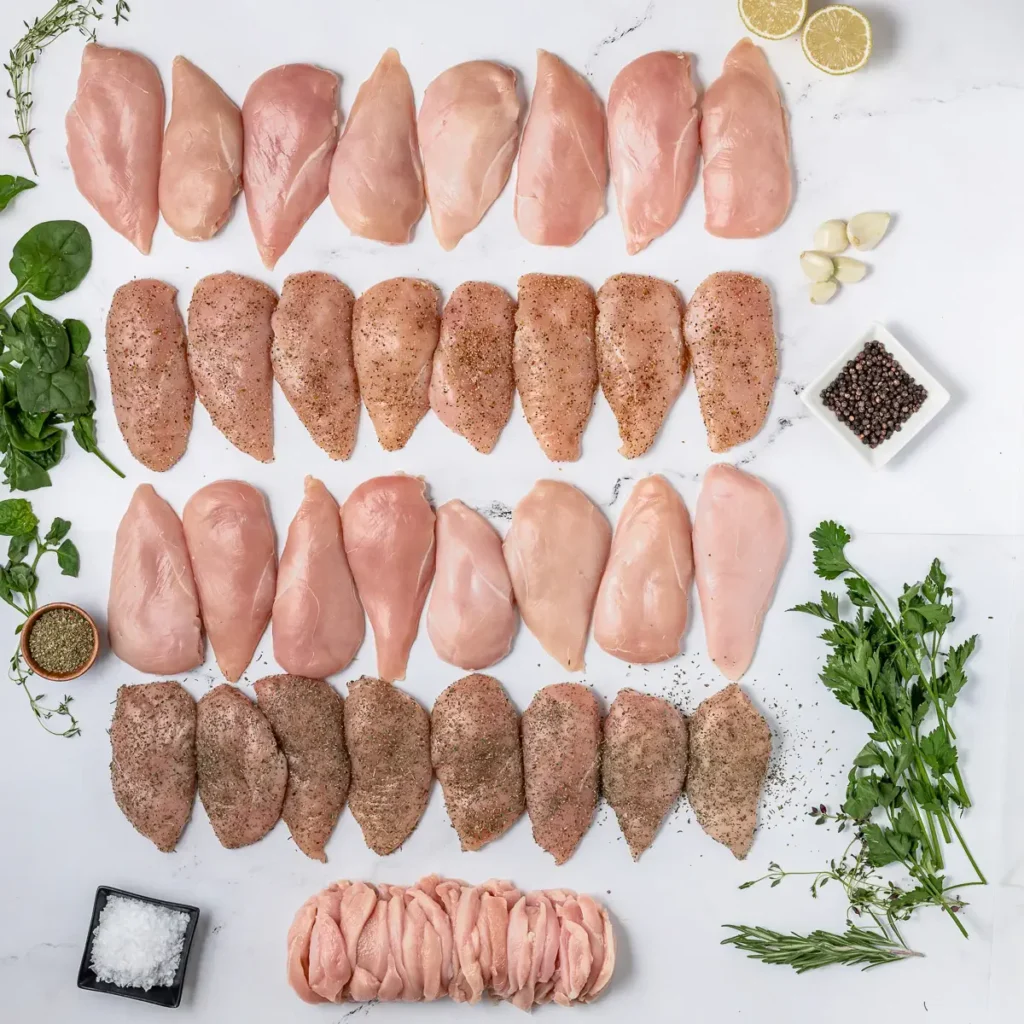
Product Form: Clearly define if the listing is for Live Poultry (requires specialized transport and health certifications), Whole Carcasses, or Further Processed Parts (e.g., boneless/skinless breasts).
Traceability: Increasingly, buyers require documentation on feed source, housing conditions (e.g., free-range, pasture-raised, cage-free), and certification labels (Organic, Non-GMO).
Packaging: Note whether products are fresh (chilled) or frozen, as this dictates shelf life and shipping requirements.