From the Wild
Wild Boar
Harvesting wild boar involves a systematic process of hunting, field dressing, skinning, and butchering to safely secure high-quality wild game meat. Because feral hogs are an destructive invasive species, many regions offer flexible regulations, but proper handling is crucial to ensure the meat tastes good and remains safe from pathogens.
1. Regulations and Selection
- Check local laws regarding licenses, permits, and seasonal limits before hunting.
- Target smaller, younger hogs under 150 pounds for the most tender, mild meat.
- Avoid massive older boars because they carry hormones that taint the fat with a strong odor.
- Bleed the animal immediately after harvesting to reduce gamey flavors and improve meat color.
2. Field Dressing (The Gutless Method)
Many hunters prefer the quick gutless processing method because it keeps the internal organs intact and avoids puncturing the stomach or intestines.
- Lay the hog on its back or side on a clean tarp or tailgate.
- Make an incision along the length of the spine from the neck down to the tail.
- Peel the skin down and outward on both sides to expose the meat without touching the guts.
- Slice and pull the backstraps away from the backbone on either side.
3. Quartering and Meat Breakdown
Once the skin is peeled back, you can safely remove the prime cuts of meat.
- Front Shoulders: Cut through the natural muscle seam connecting the shoulder blade to the rib cage.
- Hind Quarters: Follow the bone line down to the ball-and-socket hip joint to detach the hams.
- Tenderloins: Carefully reach inside the pelvic cavity along the spine to pull out these highly tender strips.
- Belly and Ribs: Strip the thin belly meat for curing or use a meat saw to remove the rib racks.
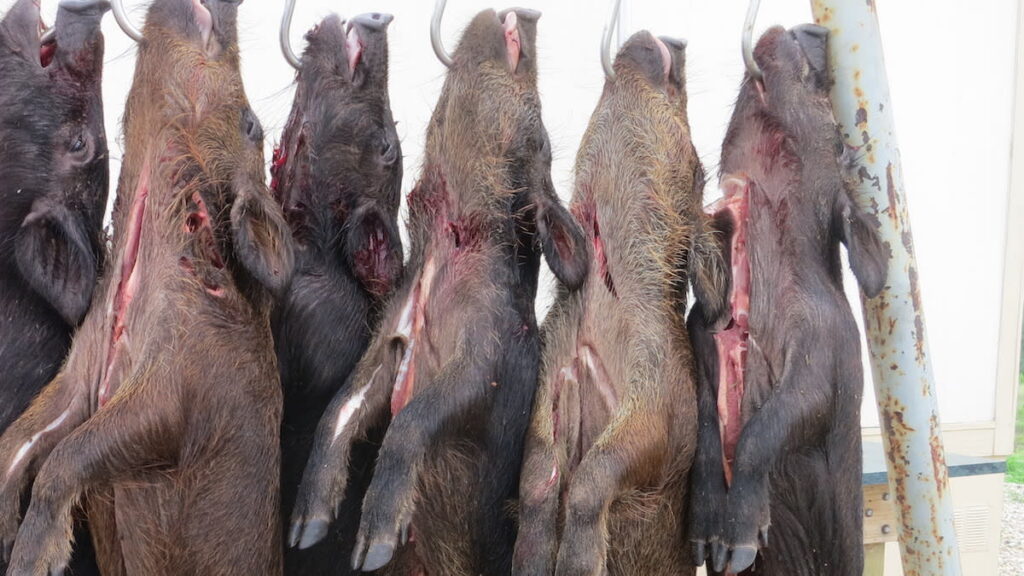
Harvesting wild boar is an effective way to manage an invasive species while obtaining lean, flavorful meat. The process requires careful planning, proper shot placement, and immediate field processing to ensure meat quality and safety.
1. Regulations and Sourcing
- Local Laws: Most regions classify wild hogs as invasive, allowing year-round tracking, trapping, or shooting with few bag limits.
- Size Selection: Target hogs between 90 and 230 pounds. Larger, older boars carry androstenone hormones in their fat, which can give the meat a very strong, unappealing odor.
2. Shot Placement
Hogs have a unique anatomy compared to deer. Their vital organs are positioned lower and more forward in the chest cavity, and large boars possess a thick cartilaginous “shield” over their shoulders.
- Rifle Shots: Aim a quarter of the way up from the bottom of the brisket and just a couple of inches behind the shoulder’s rear edge to destroy the heart and lungs while preserving shoulder meat.
- Bow Shots: Wait for the pig to look or walk “quartering away”. Aim at the opposite shoulder to ensure the broadhead punctures both lungs.
3. Field Dressing and Butchering
Because feral hogs carry heavy layers of insulating fat and thick hides, they trap body heat quickly. You must skin and cool the meat immediately to prevent spoilage.
- The Gutless Method: This is the cleanest and fastest way to process a hog in the field without puncturing internal organs.
- Slice the skin directly down the length of the spine from the head to the tail.
- Peel the hide downward away from the carcass to expose the muscles.
- Slice along the spine to extract the backstraps.
- Slice through the natural muscle seams to detach the front shoulders.
- Follow the bone contours at the hip ball-and-socket joint to remove the hind quarters.
- The Traditional Method: If you want to harvest the ribs or belly meat for bacon, hang the hog by its hind legs, make a centerline belly cut, and remove the entrails before skinning.