Ranchers
Pork Meats
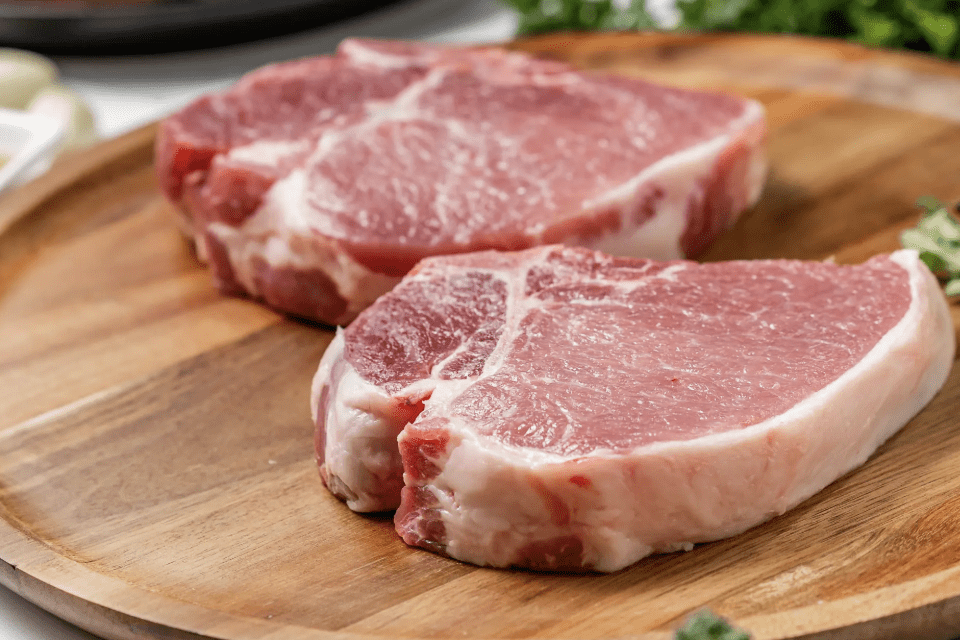
- Raw: Bright grayish-pink color, firm to the touch, with a fine grain and an outer layer of firm white fat (marbling).
- Cooked: Ranges from white to light gray or pale pink depending on the specific cut and cooking method.
- Tenderloin: The most tender, lean, and narrow cut; cooks quickly.
- Loin: A larger cut great for roasting or slicing into thick pork chops.
- Shoulder (Boston Butt): Well-marbled, making it ideal for slow cooking and pulled pork.
- Ribs & Belly: Richer cuts often used for smoking, barbecuing, or curing into bacon.
Pork is the culinary name for meat derived from the domestic pig. It is the most widely consumed meat globally, valued for its culinary versatility, flavor profile, and relatively high feed-conversion efficiency in agricultural production.
Primary Cuts and Culinary Usage
Pork is typically categorized by the section of the animal from which the cut is taken, each requiring different cooking methods:
Loin: The leanest and most tender part (includes chops, tenderloin, and roasts). It is best suited for quick, high-heat cooking like grilling, pan-searing, or roasting.
Shoulder (Pork Butt/Boston Butt): Contains significant fat and connective tissue. It is the gold standard for “low and slow” cooking methods, such as smoking, braising, or slow-roasting, as the collagen breaks down into gelatin, resulting in tender, succulent meat.
Belly: A high-fat cut primarily used for curing and smoking into bacon, or for high-heat roasting to achieve crispy skin (chicharrón or porchetta).
Ribs: Popular in barbecue, these are fatty, flavorful, and best when smoked or slow-cooked.
Leg (Ham): Often cured, smoked, or roasted whole.
Nutritional Profile
Pork is a nutrient-dense protein source, though its profile varies significantly based on the cut and the degree of processing:
Protein: An excellent source of high-quality, complete protein containing all essential amino acids.
Vitamins and Minerals: It is particularly rich in B-vitamins, especially thiamine (B1), as well as niacin, B6, and B12. It also provides essential minerals like zinc and selenium.
Fat Content: While some cuts are fatty, many modern pork cuts (especially those from the loin) are lean. The fat composition is a mix of saturated and monounsaturated fats.
Production and Standards
In agricultural commerce, pork production is subject to rigorous standards:
Feeding Regimes: The animal’s diet directly influences the fat quality and flavor of the meat. Commercial operations often use corn and soybean-based feeds.
Food Safety: Because pork can carry pathogens like Trichinella or Salmonella, modern food safety guidelines (such as those from the USDA) emphasize maintaining the cold chain and reaching appropriate internal temperatures (minimum $63^\circ\text{C}$ or $145^\circ\text{F}$ for whole cuts) during cooking.
Processing: Pork is heavily utilized in processed forms, including sausages, hams, and cured meats. These products require strict regulatory compliance regarding sodium levels, curing agents (nitrites/nitrates), and shelf-stability.
Market Classification
If you are listing pork products on your auction platform, consider these distinctions:
Commodity vs. Specialty: Distinguish between standard commodity pork and specialty categories such as Heirloom breeds (e.g., Berkshire/Kurobuta), pasture-raised, or organic/antibiotic-free pork, as these command significantly different price points.
Logistics: Pork is highly perishable. Effective auction management requires strict adherence to cold-chain logistics, as raw pork requires consistent temperature control to ensure quality and safety.