

Herbs and Spices
Fresh Herbs
Fresh herbs are the vibrant, aromatic leaves and tender stems of plants used to add color, aroma, and flavor to cooking. Unlike their dried counterparts, they offer a bright, nuanced taste and are widely categorized into two main types based on their texture:
- Tender (Soft) Herbs: Delicately textured herbs like basil, cilantro, mint, dill, parsley, and tarragon. Because their subtle flavors are easily destroyed by heat, they are best added raw or at the very end of cooking (e.g., as a garnish).
- Hearty (Woody) Herbs: Sturdier plants with woodier stems like rosemary, thyme, oregano, and sage. They hold up well to heat and are best added earlier in the cooking process (such as in braises, roasts, or soups) to slowly infuse their flavor.
How to Select and Store
- Selection: Look for bunches that stand tall with vibrant, bright green leaves. Avoid any that are wilted, slimy, or have yellowing/brown spots.
- Storage (Tender): Trim the bottoms of the stems and store them upright in a glass with a little water (like a bouquet of flowers), loosely covering the leaves with a plastic bag. Place them on the counter or in the fridge, changing the water if it gets cloudy.
- Storage (Hearty): Wrap the stems in a slightly damp paper towel and place them inside an unsealed plastic bag in the vegetable crisper drawer of your refrigerator.
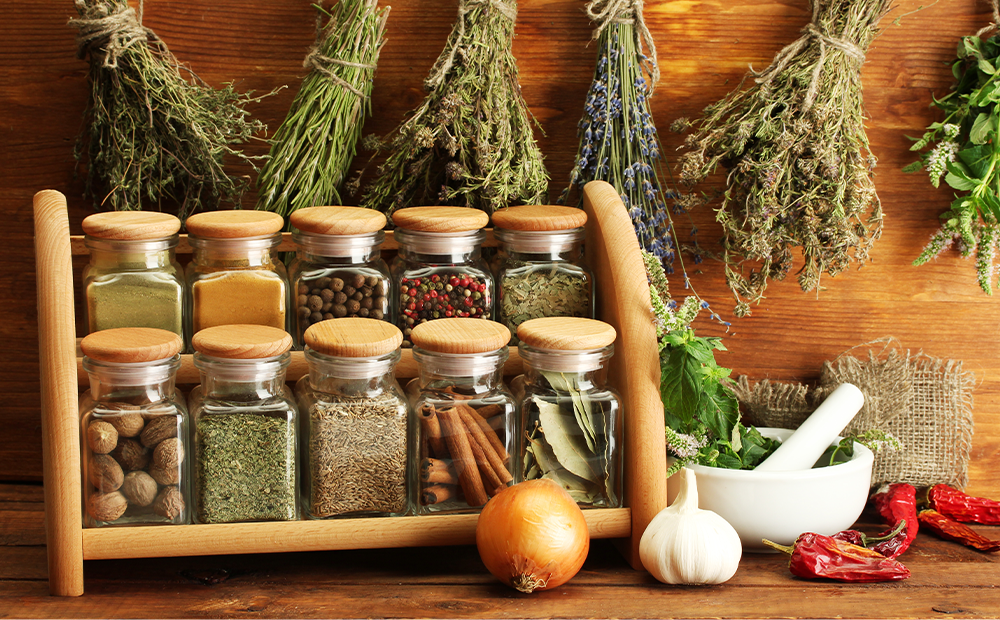
Fresh herbs are aromatic plant parts—typically leaves, stems, or flowers—used in culinary applications for their flavor, fragrance, and color. They are categorized based on their texture and heat tolerance:
Soft (Delicate) Herbs
These herbs have tender stems and leaves and are typically added at the end of the cooking process or used raw.
- Examples: Basil, cilantro, parsley, dill, chives, tarragon, and mint.
Hardy (Woody) Herbs
These feature tougher stems and leaves, allowing them to withstand longer cooking times, such as in soups, stews, or roasts.
- Examples: Rosemary, thyme, oregano, sage, and bay leaves.
Characteristics and Handling
- Moisture Content: Their high water content makes them highly perishable compared to dried alternatives.
- Flavor Profile: Fresh herbs provide a “bright” or “fresh” flavor profile due to high concentrations of volatile essential oils.
- Storage: They require specific temperature and humidity control to prevent wilting or decay.