

Herbs and Spices
Ground Spices
- Potency: Ground spices have a concentrated, immediate taste. When substituting for whole spices, you generally need about 25% less, as all the flavor is instantly accessible to your palate.
- Lifespan: They oxidize and lose their volatile aromas much faster than whole spices. Pre-packaged ground spices typically retain their peak quality for 6 to 12 months.
- Baking: Essential for achieving perfectly smooth textures in cakes, cookies, and quick breads.
- Quick Sauces: Perfect for fast-paced cooking where you don’t have time for the prolonged infusion required by whole spices.
- Building a Foundation: Use them in dishes where the flavor should seamlessly weave into the background, such as Indian curries, chili, or Mexican moles.
- Bloom in Fat: To unlock their flavor and prevent a “raw” taste, gently sauté ground spices in oil or butter for a minute before adding liquids to the pot.
- Add Late: Because their flavors can mellow during long cooking, many chefs add ground spices toward the middle or end of a recipe for a fresh flavor boost.
- Storage: Store them in airtight containers in a cool, dark place (like a pantry) away from the stove to extend their flavor life.
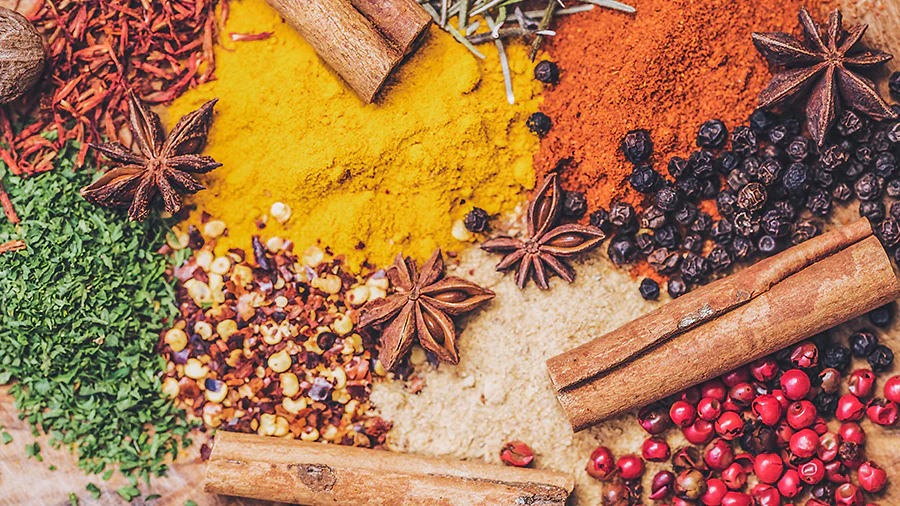
Ground spices are the powdered or finely milled form of whole dried spices—such as seeds, bark, roots, or fruit—that have been processed to release their flavor and aroma more quickly and uniformly. Unlike whole spices, which require grinding before or during cooking, ground spices are ready for immediate integration into dishes.
Culinary Profile and Characteristics
Surface Area: The grinding process significantly increases the surface area of the spice. This allows for rapid extraction of flavor and essential oils when the spice is exposed to heat or moisture, making ground spices ideal for baking, sauces, and quick cooking.
Consistency: Ground spices ensure a uniform flavor distribution throughout a recipe, which is particularly important in baking or when preparing large batches of savory dishes where uneven chunks of whole spice would be undesirable.
Potency: Because ground spices have more surface area exposed to air, they are more prone to oxidation and loss of essential oils than their whole counterparts. They are at their most potent immediately after grinding.
Common Categories
Ground spices span a vast range of botanical sources:
Bark: Cinnamon, cassia.
Seeds: Cumin, coriander, mustard, cardamom, fennel.
Fruit/Berries: Black pepper, paprika (from dried peppers), allspice, star anise.
Roots/Rhizomes: Ginger, turmeric.
Flowers/Buds: Cloves, saffron.
Commercial and Storage Considerations
Shelf Life: Ground spices have a shorter shelf life than whole spices. While they do not “spoil” in a way that causes illness, they lose their volatile compounds and flavor intensity over time. For optimal quality, they should be consumed within 6–12 months of grinding.
Storage Environment: To preserve freshness, ground spices must be stored in airtight containers away from heat, moisture, and direct sunlight. Light and heat are the primary drivers of flavor degradation.
Quality Markers: High-quality ground spices should be vibrant in color and intensely aromatic. A muted color or a lack of strong scent when the container is opened typically indicates that the product has oxidized or is past its peak potency.