

Herbs and Spices
Whole Spices
- Peak Freshness & Potency: Ground spices lose their flavor and oils quickly through oxidation. Whole spices retain their potency for 2-4 years if stored in a cool, dark place.
- Controlled Flavor Release: Whole spices can infuse, be toasted, or be freshly ground on demand for maximum impact.
- Visual Appeal: They add rustic, authentic textures and beautiful aesthetics to stews, broths, and pickles.
- Seeds: Cumin, coriander, mustard, fennel, fenugreek, and caraway.
- Pods & Buds: Green and black cardamom, star anise, and cloves.
- Bark & Roots: Cinnamon sticks (cassia) and turmeric fingers.
- Berries: Black and white peppercorns and allspice.
- Tempering (Tadka): Fry whole spices briefly in hot oil or ghee to release their fat-soluble oils and infuse the base of curries, dals, and stews.
- Infusing: Simmer whole spices whole or in a cheesecloth bag in soups, broths, and braises, removing them before serving.
- Dry Roasting & Grinding: Toast whole seeds in a dry pan until fragrant, then crush them using a Mortar and Pestle or a dedicated spice grinder to make instant, fresh spice blends.
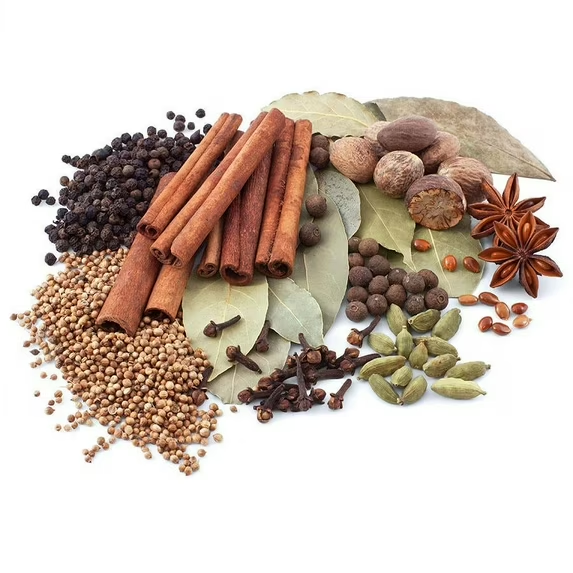
Whole spices are the raw, unprocessed or minimally processed seeds, fruits, roots, barks, or flowers of plants. Unlike ground or pre-blended versions, they remain in their original botanical form, which preserves their volatile essential oils—the compounds responsible for flavor and aroma—for a significantly longer period.
Botanical Sources
Whole spices are categorized by the part of the plant from which they are derived:
Seeds: Cumin, coriander, mustard, caraway, fennel, and fenugreek.
Bark: Cinnamon sticks and cassia.
Fruit/Berries: Whole black, white, or green peppercorns, allspice berries, juniper berries, and star anise.
Roots/Rhizomes: Dried ginger root or turmeric fingers.
Flowers/Buds: Whole cloves and dried saffron threads.
The Advantage of “Whole”
Flavor Longevity: The essential oils in spices are highly volatile and begin to oxidize and evaporate the moment the plant cell structure is broken (such as through grinding). Whole spices act as a protective vessel for these oils, remaining potent for years if stored properly.
Control over Texture and Intensity: By keeping spices whole, the cook controls when and how the flavor is released. They can be used whole to infuse liquids (like bay leaves in a stock) or toasted and ground immediately before use to maximize impact.
Toasting Potential: Whole spices are uniquely suited for dry-toasting. Heating them in a pan releases their aromatics through the Maillard reaction and oil release, providing a depth of flavor that is difficult to replicate with pre-ground versions.
Commercial and Storage Considerations
Shelf Stability: Whole spices have the longest shelf life of any culinary pantry item. When stored in an airtight container away from light, heat, and moisture, many can remain at peak quality for 2 to 4 years.
Moisture Sensitivity: Despite their durability, they are susceptible to humidity. Moisture can lead to mold growth or cause seeds to sprout if they have been improperly dried.
Quality Indicators: Look for uniformity in size, color, and lack of debris. Whole spices should be free from signs of pest infestation (small holes in seeds or bark) and should release a strong, immediate fragrance when crushed.
Culinary Handling
Infusion: Used whole in long-simmering dishes (stews, soups, braises) where they can be strained out before serving.
Bloom: Briefly heating whole spices in hot oil or fat at the start of cooking “blooms” them, drawing out fat-soluble flavor compounds that disperse throughout the entire dish.
Fresh Milling: Using a mortar and pestle or a dedicated spice grinder to pulverize whole spices just seconds before adding them to a dish provides a level of aromatic intensity that is technically superior to any pre-processed product.