
Farmer Beans
Beans are the edible seeds or seedpods of plants belonging to the legume family (Fabaceae). They are highly valued worldwide for their dense nutritional profile, functioning both as an immature, crisp vegetable (like green beans) and a mature, dried staple known as a pulse (like black or kidney beans).
Beans are one of the most versatile and important legumes in global agriculture. As a staple crop, they offer a unique combination of high nutritional value, long-term storage stability, and soil-enriching properties.
Nutritional Profile
Beans are a dense source of essential nutrients, serving as a primary protein substitute for meat in many dietary patterns:
Macronutrients: They are rich in complex carbohydrates, plant-based protein, and dietary fiber, which promotes digestive health and satiety.
Micronutrients: They are excellent sources of B-vitamins (particularly folate), iron, magnesium, phosphorus, and potassium.
Low Fat: Most beans are naturally low in fat and contain no cholesterol.
Common Categories
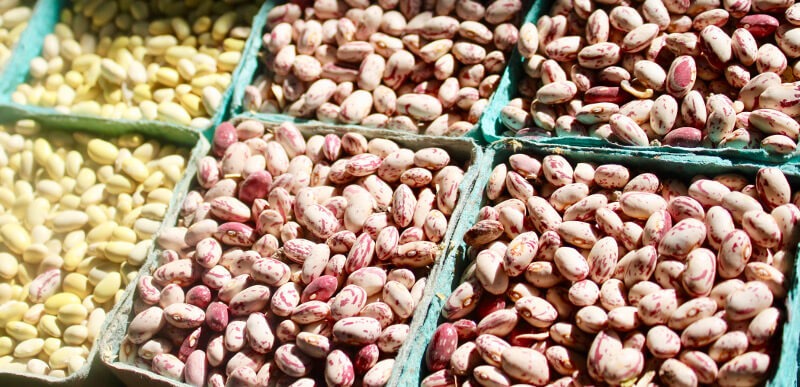
Beans are typically categorized by their seed coat color, shape, and usage, with distinct culinary roles for each:
Kidney Beans: Large, kidney-shaped, and deep red. They hold their shape well and are staples in chili and stews.
Black Beans: Small, shiny, and black with a dense, earthy flavor. They are fundamental in Latin American and Caribbean cuisines.
Chickpeas (Garbanzo Beans): Round, cream-colored, and nutty. They are essential for hummus and various Mediterranean dishes.
Pinto Beans: Mottled brown, which turns solid brown when cooked. They are a classic base for refried beans.
Navy Beans (White Beans): Small, white, and quick-cooking. They are the standard for baked beans and hearty soups.
Lima/Butter Beans: Creamy in texture with a mild flavor, often used in succotash or southern-style dishes.
Agricultural & Commercial Significance
Nitrogen Fixation: Similar to lentils, beans are legumes that have a symbiotic relationship with soil bacteria to fix nitrogen. This significantly reduces the need for synthetic fertilizers in the fields where they are grown.
Storage and Distribution: Dried beans are highly durable and have an indefinite shelf life if kept in a cool, dry, and airtight environment. This makes them an ideal commodity for long-distance trade and bulk auction logistics, as they are not subject to the rapid spoilage of fresh produce.
Processing: Commercially, beans are sold in multiple forms: dry (whole or split), canned (cooked), or as flours (often used in gluten-free baking).
Culinary Handling
Preparation: While most dried beans require soaking (or a quick-boil method) to rehydrate and reduce cooking time, they are forgiving in the kitchen.
Flavor Profile: Beans are essentially flavor-neutral, acting as a “blank canvas” that readily absorbs the herbs, spices, and fats (like bacon or oils) they are cooked with.