
Farmer Peas
A pea is the small, spherical seed or seed-pod of the pod fruit Pisum sativum, belonging to the legume family. Grown as a cool-season vegetable, they are prized globally for their sweet flavor, high protein, and versatility in both fresh and dry culinary dishes.
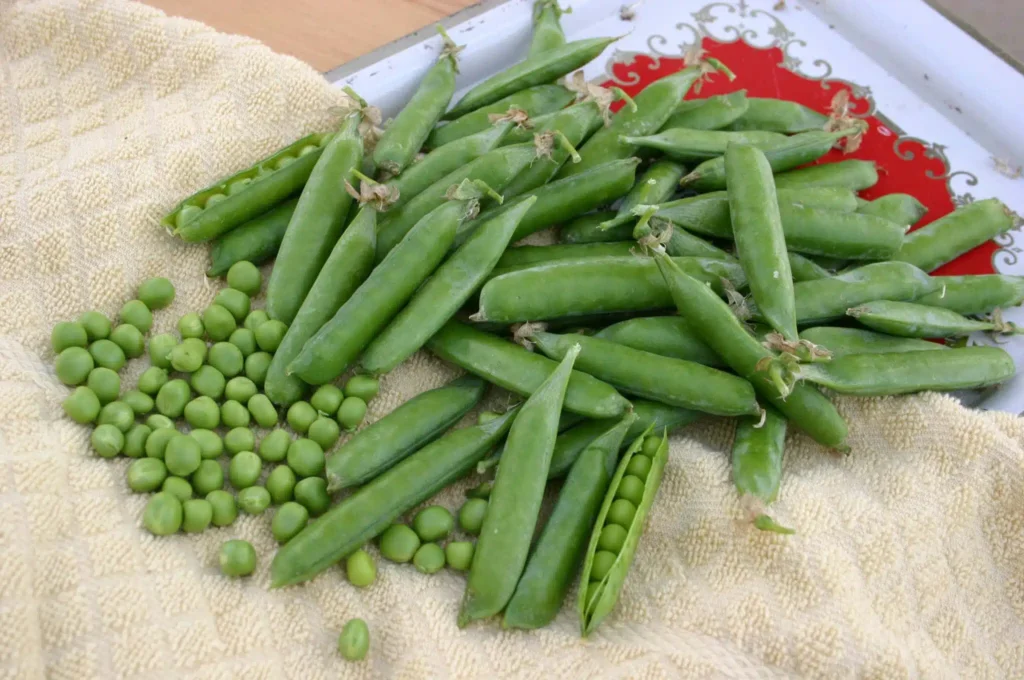
Peas are among the most versatile legumes, grown globally for both fresh consumption and dry commodity markets. They are unique in that they are harvested and consumed in various stages of maturity, ranging from tender green pods to dried, split seeds.
Botanical and Culinary Classifications
Peas are generally divided into three main categories based on how they are harvested and used:
Garden Peas (English Peas): These are shelled before eating. Only the round, sweet, starchy seeds inside the pod are consumed. They are typically harvested fresh, canned, or frozen.
Snow Peas: These have flat, edible pods with very small, undeveloped seeds. They are crisp and frequently used in stir-fries, raw salads, and Asian-inspired cuisine.
Snap Peas (Sugar Snap Peas): A cross between garden and snow peas, these have thick, crunchy, edible pods with plump, sweet seeds inside. They are eaten whole, either raw or lightly cooked.
Field/Dry Peas: These varieties (often yellow or green) are allowed to mature fully on the vine. Once dried, they are harvested, shelled, and often split. They are the primary source for split-pea soup and a significant global protein commodity.
Nutritional Profile
Regardless of variety, peas are highly nutrient-dense:
Protein & Fiber: Like other legumes, they are excellent sources of plant-based protein and dietary fiber, which aids in digestion and blood sugar management.
Vitamins: They are rich in Vitamin K, Vitamin C, and various B-vitamins, particularly folate.
Minerals: They provide essential minerals including manganese, iron, and potassium.
Agricultural & Commercial Value
Cool-Season Crop: Peas are a cool-season crop, meaning they are planted in early spring or late autumn to avoid high heat. This makes them a critical rotational crop for farmers in many regions.
Soil Health: As legumes, peas participate in nitrogen fixation, helping to enrich the soil with nitrogen for subsequent crops. This makes them highly valued in sustainable crop rotation systems.
Market Versatility: * Fresh Market: Highly perishable; requires efficient cold-chain logistics for transport from farm to table.
Dry/Commodity Market: Extremely stable; dry peas have a long shelf life, making them well-suited for bulk storage, long-distance transport, and auction-style distribution.
Commercial Handling Tips
Fresh: Moisture management is critical; fresh peas should be kept as close to $0^\circ\text{C}$ ($32^\circ\text{F}$) as possible to maintain sugar content, as their natural sugars convert to starch quickly after harvest.
Dry: For wholesale or auction purposes, dry peas should be stored in environments with controlled humidity (typically below 14% moisture content) to prevent mold and ensure longevity.