
Farmer Nuts
Nuts are energy-dense, nutrient-rich plant foods featuring a hard, inedible outer shell protecting an edible, oily seed. While culinary usage considers most hard-shelled kernels nuts, they are scientifically classified as true botanical nuts, drupes, or legumes.
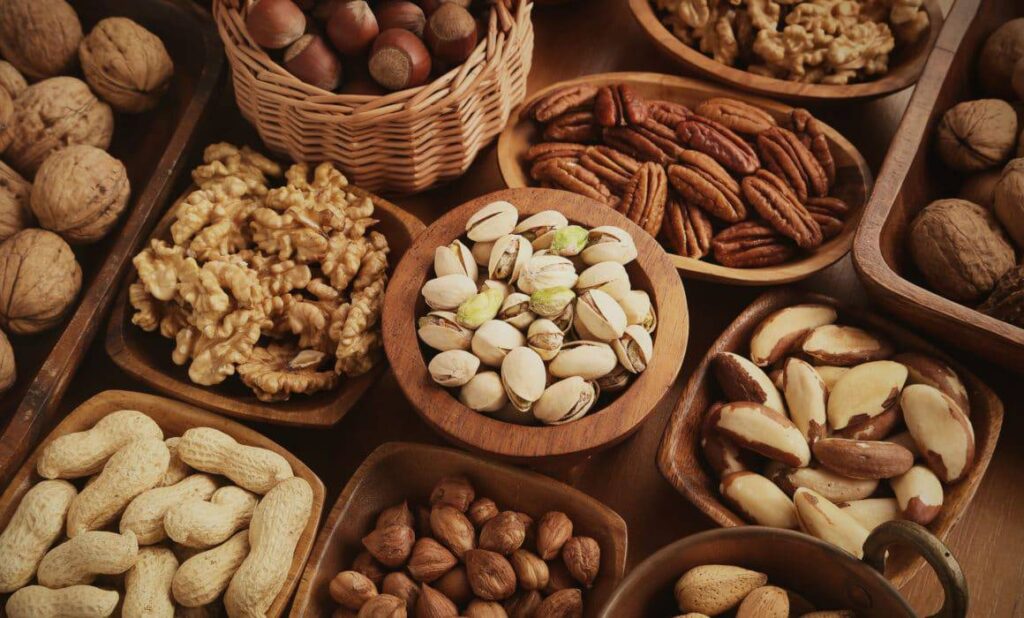
Nuts are dry, hard-shelled fruits that contain a single seed, which is typically edible and highly nutrient-dense. From a culinary perspective, they are prized for their rich flavor and versatility, while botanically, true nuts—like acorns or chestnuts—are defined by a hard shell that does not open to release the seed when ripe.
Nutritional Profile
Nuts are renowned for being “powerhouses” of essential nutrients, often recommended as part of a heart-healthy diet:
- Healthy Fats: Most nuts are high in monounsaturated and polyunsaturated fats, which are beneficial for heart health.
- Protein & Fiber: They serve as an excellent plant-based protein source and provide significant dietary fiber.
- Micronutrients: Nuts are packed with essential vitamins and minerals, including magnesium, potassium, Vitamin E, and various B vitamins.
- Antioxidants: Many nuts, particularly walnuts and pecans, contain high levels of polyphenols that help combat oxidative stress in the body.
- Common Culinary Classifications
While we group them all as “nuts” in the kitchen, many popular options fall into different botanical categories: - True Nuts: Chestnuts, hazelnuts (filberts), and acorns.
Drupes (Seeds of stone fruits): Almonds, cashews, pistachios, pecans, and walnuts. These are seeds enclosed in a hard shell, which is itself inside a fleshy fruit.
- Legumes: Peanuts are technically legumes (related to beans and lentils) that grow underground.
- Botanical Seeds: Pine nuts are seeds derived from the cones of pine trees.
- Culinary Uses
Nuts are incredibly adaptable, used in both savory and sweet applications: - Raw or Roasted: Often consumed as a standalone snack.
- Butters: Ground into pastes like almond butter, peanut butter, or cashew butter.
- Baking & Garnishing: Added to breads, cookies, cakes, and salads for texture and flavor.
- Dairy Alternatives: Soaked and blended with water to create “milks” (e.g., almond or cashew milk).
- Oils: Pressed to produce flavorful oils used in cooking or dressings (e.g., walnut oil).
Storage and Safety
Because of their high fat content, nuts are susceptible to rancidity if exposed to heat, light, or air for too long.
- Storage: To maintain freshness and prevent the healthy fats from oxidizing, it is best to store nuts in a cool, dark, and dry place. For long-term storage, keeping them in the refrigerator or freezer is highly recommended.
- Allergy Warning: Tree nuts and peanuts are among the most common food allergens, and reactions can be severe. It is always important to check labels and be aware of cross-contamination in processing facilities.