

Sea Foods
Smoked and Cured Fish
- Dry Curing: Fish is packed in a mixture of salt and sugar (and often herbs or spices) for several hours or days. This method yields a very dense, tender texture.
- Wet Brining: The fish is submerged in a salt-and-water solution before being processed.
- Cold Smoking: The fish is smoked at low temperatures (usually below 90°F or 32°C). Because it is not cooked by the heat, it retains a silky, almost raw texture and rich flavor.
- Hot Smoking: The fish is cooked in a smoker at temperatures typically between 130°F and 180°F. The resulting texture is firm, flaky, and fully cooked, with a deep, robust smoky flavor.
- Lox: Strictly cured in a salty brine and never smoked or cooked. It has a silky texture and a very salty, rich profile, classically served on bagels.
- Nova (Nova Lox): Cured in a milder brine and then cold-smoked. It offers a delicate balance of saltiness, sweetness, and smoke.
- Gravlax: A Scandinavian style where salmon is dry-cured with salt, sugar, and heavy amounts of fresh dill. It is typically unsmoked and bright in flavor.
- Hot-Smoked Salmon: Fully cooked and flaky, making it ideal for tossing into hot pasta, stirring into creamy dips, or eating over salads.
- Arbroath Smokies: A famous Scottish specialty where small haddock is salted and hot-smoked over hardwood, yielding a flavorful, ready-to-eat delicacy.
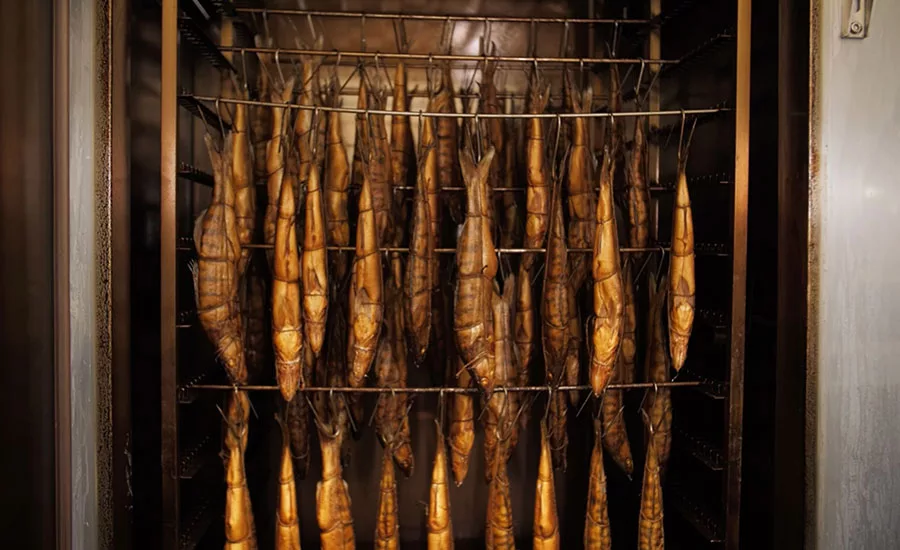
Smoked and cured fish are preserved using ancient techniques designed to extend shelf life and alter the flavor profile by removing moisture, adding salt, and—in the case of smoking—infusing the flesh with wood-derived aromatics.
Curing Techniques
Curing is the foundational step that draws moisture out of the fish, inhibiting the growth of spoilage bacteria.
Dry Curing: The fish is packed in a mixture of salt, sugar, and sometimes spices or herbs. The salt creates an osmotic effect, pulling water out of the fish flesh.
Wet Curing (Brining): The fish is submerged in a liquid brine of water, salt, and seasonings. This provides a more uniform salt distribution throughout the flesh.
Purpose: Beyond preservation, curing changes the texture of the fish, making it firmer, denser, and more translucent.
Smoking Techniques
Smoking occurs after the fish has been cured. It serves both to flavor the fish and provide an additional layer of preservation through the antimicrobial properties of smoke.
Cold Smoking: The fish is exposed to smoke at low temperatures (typically below $30^\circ\text{C}$ or $85^\circ\text{F}$). The fish remains raw in texture and requires careful curing beforehand because the temperature is not high enough to cook the protein. This method is common for lox or traditional smoked salmon.
Hot Smoking: The fish is smoked at higher temperatures (above $55^\circ\text{C}$ or $130^\circ\text{F}$), which cooks the fish through. The resulting product is opaque, flaky, and fully cooked, with a more pronounced smoky flavor.
Culinary Profiles
Texture: Cured fish like gravlax is silky and firm, while hot-smoked fish like smoked trout or whitefish is flaky and crumbly.
Flavor: The flavor depends heavily on the wood used for smoking (e.g., hickory for a strong, pungent flavor; apple or cherry for a milder, sweeter result) and the curing ingredients.
Storage and Safety
Perishability: Despite the preservation process, most smoked and cured fish are still considered semi-perishable. They must be kept under strict refrigeration.
Safety Standards: Proper production requires careful control of curing time, salt concentration, and temperature to prevent Clostridium botulinum and Listeria growth, especially in cold-smoked products.
Packaging: These products are often vacuum-sealed to remove oxygen, which prevents the fats in the fish from oxidizing and going rancid while also preventing aerobic spoilage.