

Sea Foods
Fin Fish
- The Backbone: A true spinal column.
- Fins: Appendages used for propulsion, steering, and stability. The five primary fin types are:
- Caudal Fin: The tail fin used for main propulsion.
- Dorsal Fin: The top fin used for stability and preventing rolling.
- Pectoral Fins: The side fins used for steering, hovering, and breaking.
- Pelvic Fins: The underside fins that help control pitch and stabilize the fish.
- Anal Fin: Located on the bottom rear, it provides additional balance.
- Gills: Internal organs that allow them to extract dissolved oxygen directly from the water.
- Scales: Overlapping bony plates that protect their skin, though some species (like certain catfish) are scaleless.
- Ecology: Finfish make up the vast majority of aquatic vertebrates, inhabiting environments ranging from the deep ocean to freshwater mountain streams.
- Dietary Role: They are a major food source globally, prized for being high in lean protein, healthy fats (like Omega-3s), and vitamins.
- Fisheries & Aquaculture: Finfish are foundational to commercial and recreational fishing, and are heavily raised via aquaculture to meet global seafood demand.
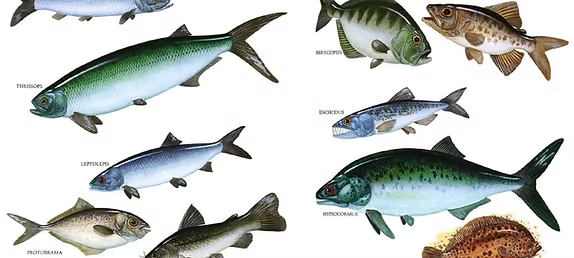
Finfish are aquatic vertebrates that possess gills and fins, distinguishing them from shellfish like mollusks or crustaceans. They make up the vast majority of fish species harvested for commercial food production.
Anatomical Classification
Finfish are generally categorized by their skeletal structure:
Bony Fish (Osteichthyes): The most common category, including species like salmon, tuna, cod, trout, and snapper. They possess a skeleton made of bone and are covered in scales.
Cartilaginous Fish (Chondrichthyes): These have skeletons made of flexible cartilage rather than bone. Common examples in a culinary context include shark and skate (ray).
Culinary Categorization by Texture and Flavor
In commerce and the kitchen, finfish are often grouped by their fat content and texture, which dictates the best cooking methods:
Lean (White) Fish: These have very low fat content (less than 2%) and mild, delicate flavors. Their flesh is typically opaque white when cooked. They are ideal for steaming, poaching, or quick-frying.
Examples: Cod, haddock, halibut, tilapia, and flounder.
Semi-Fatty Fish: These fall between lean and oily categories, offering a bit more flavor and moisture.
Examples: Sea bass, snapper, and grouper.
Oily (Fatty) Fish: These possess a high concentration of oils throughout their flesh, leading to a richer, more robust flavor and a darker, often reddish or grayish color. They are robust enough for grilling, smoking, and roasting.
Examples: Salmon, mackerel, tuna, sardines, and herring.
Commercial and Nutritional Value
Nutritional Density: Finfish are a premier source of high-quality, complete protein. Oily finfish are particularly valued for their high concentrations of Omega-3 fatty acids, which are essential for cardiovascular health. They also provide key micronutrients like Vitamin D, selenium, and iodine.
Harvesting Methods: Commercial finfish are either “wild-caught” (via various methods like trawling, longlining, or gillnetting) or “farm-raised” (aquaculture). Market prices often reflect the perceived quality, sustainability, and traceability of these methods.
Freshness Indicators: High-quality finfish should exhibit:
Eyes: Clear, bright, and slightly protruding (not sunken or cloudy).
Gills: Bright red or pink (not brown, gray, or slimy).
Flesh: Firm and elastic to the touch (it should spring back rather than leaving an indentation).
Odor: Should smell fresh like the sea or a clean stream; a strong “fishy” or ammonia-like smell indicates spoilage.