

Sea Foods
Mollusks
- The Mantle: A fold of tissue that drapes over the internal organs. In most species, it secretes a hard external shell.
- Muscular Foot: Used for crawling (snails), burrowing (clams), or grabbing prey (octopuses).
- Visceral Mass: The centralized region that houses the creature’s digestive, excretory, and reproductive organs.
- Radula: A unique, tongue-like ribbon covered in microscopic chitin teeth used to scrape food, drill holes, or shred prey (though some species, like bivalves, have lost this trait).
- Gastropods (“Stomach-Footed”): The largest group, including snails, slugs, and sea slugs. They glide along on a large muscular foot and generally live on land, in freshwater, or in the ocean.
- Bivalves (“Two Shells”): Aquatic filter-feeders that include clams, oysters, and mussels. Their body is protected by a hinged, two-part shell.
- Cephalopods (“Head-Footed”): Highly intelligent, predatory marine mollusks like squids, cuttlefish, and octopuses. They are the fastest, smartest mollusks and usually lack an external shell, instead utilizing advanced camouflage and jet propulsion.
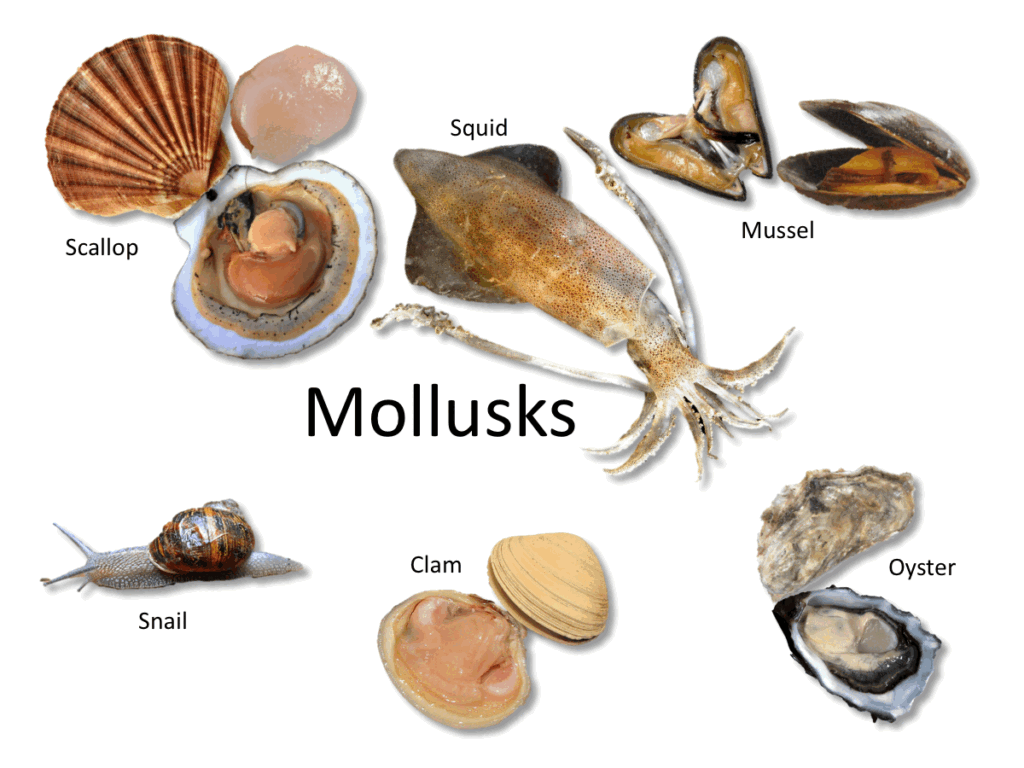
Mollusks are a diverse phylum of invertebrate animals characterized by a soft body, often protected by a hard shell. In culinary and commercial sectors, they are primarily divided into three main groups based on their physical structure and harvesting methods.
1. Bivalves
Bivalves are defined by having a hinged, two-part shell that protects the soft body inside. They are filter feeders that live in marine or freshwater environments.
Examples: Oysters, clams, mussels, and scallops.
Culinary Profile: They are prized for their briny, clean flavor. They are often served raw (oysters), steamed (mussels/clams), or seared (scallops).
Harvesting/Handling: Bivalves must be alive when purchased. They are highly sensitive to water quality, as they filter large volumes of water and can accumulate impurities.
2. Gastropods
Gastropods, or “stomach-foot” mollusks, typically possess a single, often coiled shell (or no shell at all, like slugs). In the culinary world, they are a delicacy in several cultures.
Examples: Snails (escargot), abalone, conch, and whelks.
Culinary Profile: These typically have a firmer, chewier texture than bivalves. They require specific preparation (such as long, slow cooking or tenderizing) to achieve a desirable consistency.
Harvesting/Handling: Many gastropods require thorough cleaning and processing to remove grit or tough membrane tissues before they are ready for cooking.
3. Cephalopods
Cephalopods are the most complex mollusks, lacking an external shell (with the exception of the nautilus). They are predators known for their intelligence and distinct physical features like tentacles and ink sacs.
Examples: Squid (calamari), octopus, and cuttlefish.
Culinary Profile: The meat is generally firm and lean. It has a mild, slightly sweet flavor that readily takes on other seasonings.
Preparation: These require specific techniques to avoid becoming rubbery. Squid is often sliced into rings and fried quickly, while octopus is typically braised or grilled for a long duration to break down connective tissues and ensure tenderness.
Nutritional Profile
Mollusks are a low-calorie, high-protein food source:
Minerals: They are excellent sources of zinc, iron, magnesium, and B12.
Fat: They are generally very low in fat, with most of the fat content being healthy, long-chain Omega-3 fatty acids.
Commercial and Safety Standards
Perishability: Mollusks are highly perishable. They must be kept under strict temperature control—ideally packed in ice or held in refrigerated tanks for live product—to ensure safety and quality.
Safety Regulations: Because they are filter feeders (specifically bivalves), they are subject to strict monitoring for biotoxins and bacterial contamination (such as Vibrio). Regulatory certification and proof of clean harvest areas are mandatory for safe commercial trade.
Handling: For bivalves, the shell should be tightly closed or snap shut when tapped. Any shell that remains open and does not react to touch indicates the animal is dead and should be discarded to prevent foodborne illness.