

Sea Foods
Crustaceans
- Exoskeleton: A rigid, protective outer covering made of chitin and calcium carbonate. Because it cannot grow, crustaceans must shed (molt) their shell periodically to grow larger.
- Body Segments: Bodies are typically divided into three parts: the head, thorax, and abdomen. In many species, the head and thorax are fused into a single unit called the cephalothorax.
- Appendages: They have jointed, often branching limbs modified for various tasks, including walking, swimming, feeding, and sensory perception.
- Sensory Organs: Equipped with two pairs of antennae and often compound eyes for navigating their environment and detecting food.
- Respiration: Most species breathe using gills.
- Circulation: They possess an open circulatory system where hemolymph (blood) directly bathes internal organs.
- Diet: Feeding habits vary widely; many are scavengers, while others are active predators or filter feeders.
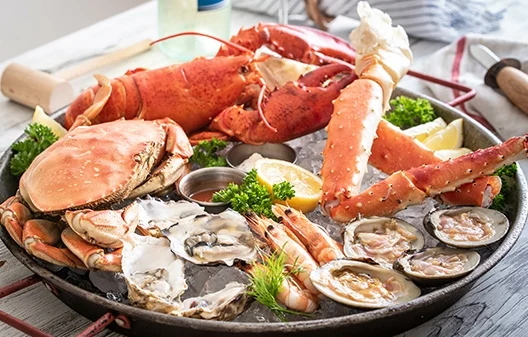
Crustaceans are a diverse group of aquatic arthropods characterized by a hard exoskeleton (shell), jointed limbs, and two pairs of antennae. In both commercial and culinary contexts, they are highly valued for their sweet, firm, and flavorful meat.
Primary Commercial Categories
Crustaceans are typically grouped based on their body structure and size:
Decapods (Ten-footed): This group includes the most significant commercially harvested species.
Lobsters: Known for their large size and prized claw or tail meat. They are typically sold live to ensure freshness.
Crabs: Including species like blue crab, Dungeness, king, and snow crab. They are harvested for their rich, delicate meat, often found in the legs, claws, and body cavity.
Shrimp and Prawns: The most consumed crustacean category globally. They range widely in size and are sold fresh, frozen, raw, or pre-cooked.
Small Crustaceans:
Crayfish (Crawfish): Freshwater crustaceans that resemble miniature lobsters; they are a staple in regional cuisines, particularly in the Southern United States.
Krill: Tiny crustaceans that serve as a foundational food source in marine ecosystems and are harvested on a massive scale for use in aquaculture feed and dietary supplements.
Culinary Profile
Texture: Crustacean meat is generally firmer and more fibrous than finfish, providing a satisfying “snap” or “bite.”
Flavor: They are naturally sweet, largely due to high concentrations of specific amino acids like glycine and alanine. This sweetness is enhanced by the flavor of the cooking liquid or butter.
Preparation: Because they are highly delicate, they require quick, gentle cooking methods—such as boiling, steaming, poaching, or quick grilling—to avoid becoming tough or rubbery.
Nutritional Profile
Crustaceans are a concentrated source of high-quality nutrition:
Lean Protein: They are very low in fat and high in protein.
Micronutrients: They are packed with essential minerals including selenium, zinc, copper, and iodine. They also provide significant amounts of Vitamin B12.
Cholesterol: While they are cholesterol-rich, they are also low in saturated fats, leading most modern dietary guidelines to consider them a heart-healthy protein source.
Handling and Food Safety
Live Handling: Many crustaceans, particularly lobsters and crabs, are sold live to guarantee quality and safety. They must be kept in oxygenated, temperature-controlled saltwater environments. Once they die, their flesh begins to degrade rapidly, and bacteria can produce harmful toxins.
Perishability: Once processed (shucked or cooked), they are highly perishable and prone to bacterial contamination. They require strict temperature control, ideally maintained at 0° C to 2° C (32° F to 36° F).
Allergen Warning: Crustacean shellfish are one of the most common food allergens, and reactions can be severe and life-threatening. Proper labeling and awareness of cross-contamination in processing facilities are mandatory.
Quality Indicators
Color: The shell should be vibrant and intact, free from dark, mushy, or slimy patches.
Smell: Fresh crustaceans should smell clean, like the ocean. Any “ammonia” or overly sour odor is a definitive indicator of spoilage.
Weight/Density: A high-quality crustacean should feel “heavy” for its size, indicating that the shell is full of meat and not empty due to a recent molting cycle.